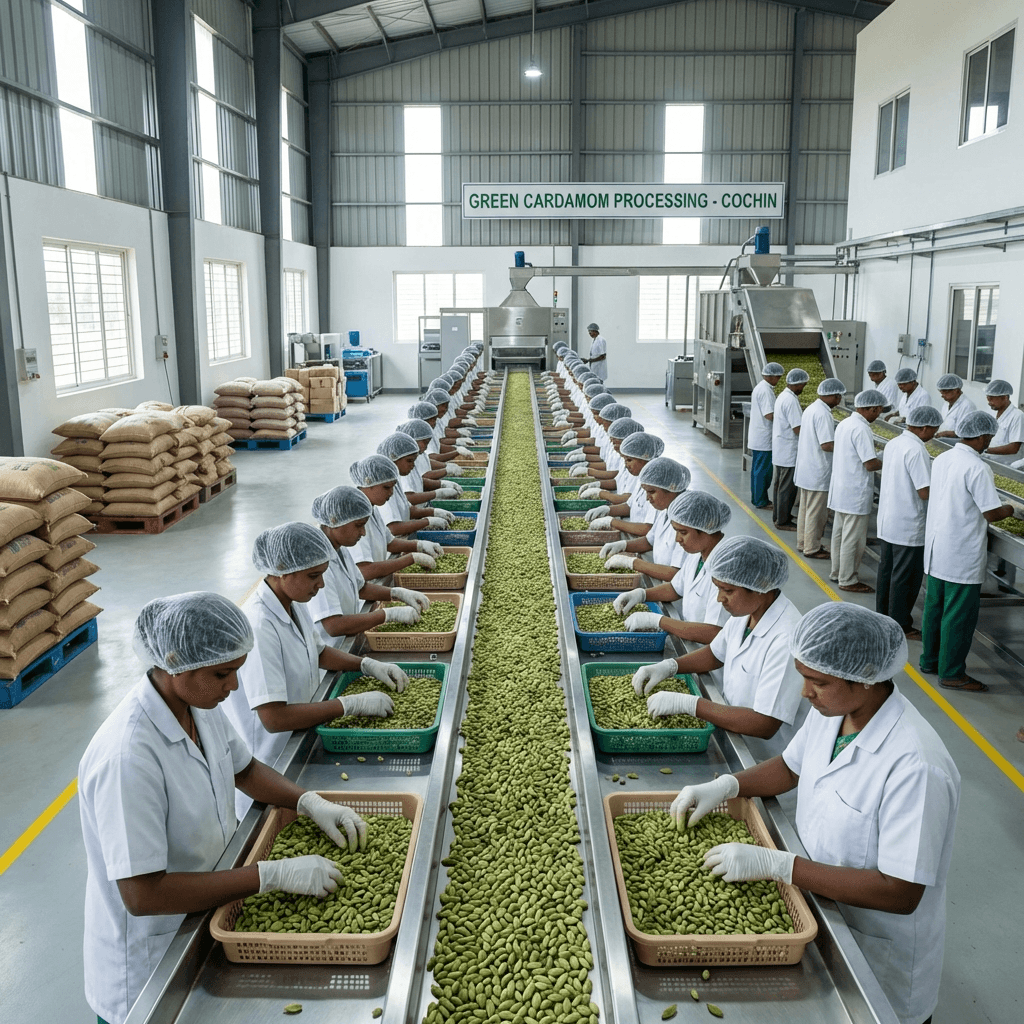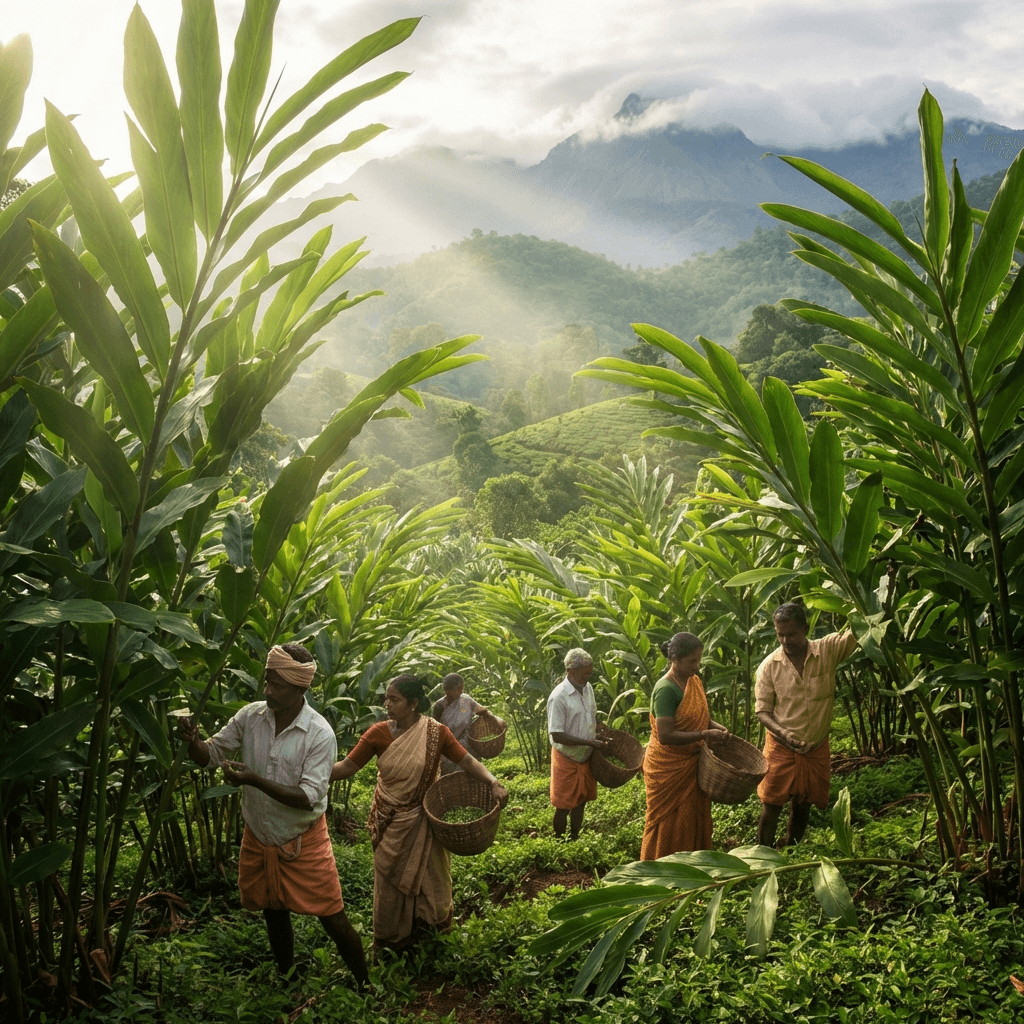
The short answer: cardamom is expensive because it is one of the most labour-intensive spices in the world to produce. Every pod is picked by hand, the same plant must be harvested many times over a season as pods ripen unevenly, and the delicate crop demands careful curing and a specific mountain climate. Combined with strict grading, these factors make green cardamom consistently rank among the three costliest spices on earth, after saffron and vanilla.
For buyers, understanding what drives the price is the best defence against false economy. A suspiciously cheap offer almost always reflects a corner cut somewhere in the chain below.
The Real Reasons Behind the Price
- Every pod is hand-harvested. Cardamom capsules grow on low panicles at the base of the plant and cannot be machine-picked without damaging the crop. Skilled workers harvest each pod by hand, which makes labour the single largest cost in production.
- Pods ripen unevenly, forcing multiple pickings. Unlike crops harvested once, cardamom matures gradually. The same plantation must be picked over and over — often many separate rounds across a season — with workers selecting only the pods that have reached the right maturity each time. This repeated selective picking multiplies the labour required per kilogram.
- Selective picking protects quality. Picking too early gives small, low-oil pods; picking too late means split or faded capsules. Harvesting at exactly the right moment, pod by pod, is what preserves the deep-green colour and high essential-oil content premium markets pay for — and it cannot be rushed.
- Curing and drying require care. After harvest, capsules must be cured and dried to a stable moisture level without losing their green colour or volatile oils. Over-drying scorches aroma; under-drying invites mould in storage and transit. Controlled curing adds time, energy and skill to the process.
- The crop is weather and climate sensitive. Cardamom thrives only in a narrow band of cool, shaded, high-altitude conditions with reliable monsoon rainfall, such as the Western Ghats Cardamom Hills. Irregular rain, heat stress or drought can sharply reduce yields, and limited suitable growing land keeps supply tight.
- Rigorous grading separates the crop by value. Cured capsules are sorted by size into grades, because larger pods carry more seed mass and therefore more oil. Grading is extra handling, but it is essential — and it concentrates the highest costs into the boldest, highest-oil grades.
- Bold, high-oil grades cost the most. The premium tier exists because bold capsules are scarcer and more aromatic. AGEB (Extra Bold, 8mm+) carries 7–8% essential oil and commands the highest price; AGB (7–8mm) sits mid-range; AGS (6–7mm) is the most economical. You are paying for oil content and visual size, both of which rise with grade.
Why Premium Grades Are Worth It
Higher-oil cardamom is more economical than it looks. Because flavour lives in the essential oil, a small quantity of bold AGEB does the work of a much larger quantity of weak, low-oil pods. For premium retail, Gulf qahwa service and gifting, where capsules are seen and smelled before purchase, the bold grades justify their price through appearance and aroma alike.
How This Shapes Honest Pricing
Because every cost above is real, Indian cardamom is priced through transparent Spices Board auctions that move daily. An offer far below the prevailing market usually hides a problem: undersized capsules slipped into a bold-grade contract, aged stock, or padded lots. The protection for a buyer is a pre-shipment sample with a Certificate of Analysis tying the delivered goods to the quoted specification.
Sourcing Premium Cardamom
Emperor Spices grades and exports Alleppey Green Cardamom from Bodinayakanur, at the heart of the Cardamom Hills belt. By buying close to harvest and grading at source, we ensure the price you pay reflects genuine quality — fresh, high-oil capsules verified by COA — rather than the hidden compromises that make a cheap quote expensive in the end.